Where does the training take place?

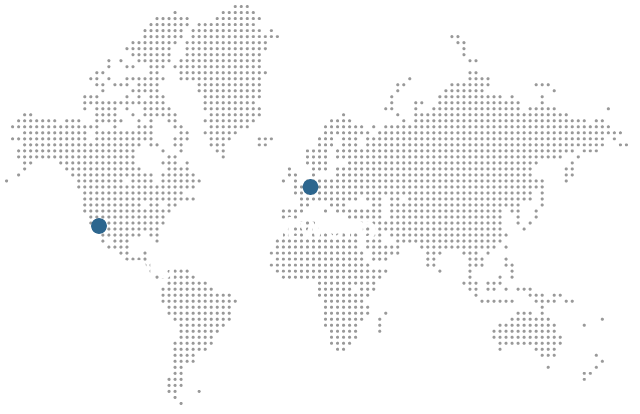
EuroPilot Center operates two pilot schools: one at the international airport of Antwerp and one in Thermal, California. Both campuses feature modern training facilities, the latest flight simulators, and a modern glass cockpit fleet.

Part of the airline pilot training takes place in California, where conditions are ideal for flight training. Students benefit from excellent weather conditions, experience with mountain flying, and flights to challenging destinations such as Los Angeles, Las Vegas, Catalina Island, Big Bear, and the Grand Canyon. The complex airspace also provides valuable operational experience and offers the opportunity to significantly improve radio communication skills in English. In addition, the absence of landing fees allows for more intensive flight training.

Frequently asked questions

There are no specific prior education requirements to start the Airline Career Program (ACP). A secondary school diploma is sufficient, although a solid foundation in mathematics and physics can be beneficial during the training.

The programme is open to motivated candidates from the age of 18 who successfully complete the screening process and meet the medical and administrative requirements.

To help candidates prepare, EuroPilot Center offers a free mathematics and physics refresher course before the screening and the start of the programme. Access to this course is provided as soon as you officially register for the online EPC PELICAN test (see also: How does the screening process work for the Airline Career Program (ACP)?).

To start the Airline Career Program (ACP), you will go through a screening process consisting of five steps:

1. Mathematics & Physics Refresher
After submitting your application, you will receive access to the IPCA Video Streaming App, allowing you to prepare for the screening over several weeks while already building a strong foundation for the training.

2. PELICAN© Test
This test evaluates your learning potential and cognitive abilities. It can be completed online or on our campus in Antwerp.

3. I-JET Simulator Assessment
During a simulator session of approximately 60 minutes, we assess your basic flying skills, learning capacity, and cockpit personality.

4. Medical Examination
To start the training, you must obtain an EASA Medical Class 1 and an FAA Medical Class 3 (the latter is obtained in the United States).

5. Financial Evaluation
Finally, we review the financial feasibility of the training together and discuss possible financing options.

To start your pilot training, you must first obtain a medical certificate issued by an approved aeromedical examiner (AME) or an authorised aeromedical centre. This medical assessment ensures that you meet the physical and psychological requirements necessary for a safe career in aviation.

The examination consists of two parts:
1. Physical examination including checks of your vision, hearing, blood and urine tests, and general health.
2. Psychological assessment to evaluate your mental suitability for a career as a pilot.

Do you wear glasses or contact lenses? In most cases, this is not a problem. As long as your vision can be adequately corrected, it is often possible to obtain a medical certificate. The exact limits are determined by the aeromedical centre.

In Belgium, these examinations are carried out for example at the Expertise Centre for Aviation Medicine in Brusselsor at the Queen Astrid Military Hospital in Neder-over-Heembeek. The exact cost may vary depending on the medical centre. 


Would you like more information or assistance scheduling your medical examination?
Feel free to book an appointment with one of our Aviation Coaches - we will gladly guide you through the process.

The Airline Career Program (ACP) has three intakes per year, starting in January, July, and October.

To ensure high training quality and personal guidance, we work with small classes of up to 10 students per intake.

Your place in the Airline Career Program (ACP) is guaranteed once the following requirements are completed:

  • Successful completion of the screening
  • Confirmation of your medical certificate
  • Proof of financial capacity for the training (e.g. loan approval or financial statement)

Once these conditions are met, your seat in the next available class is officially reserved.

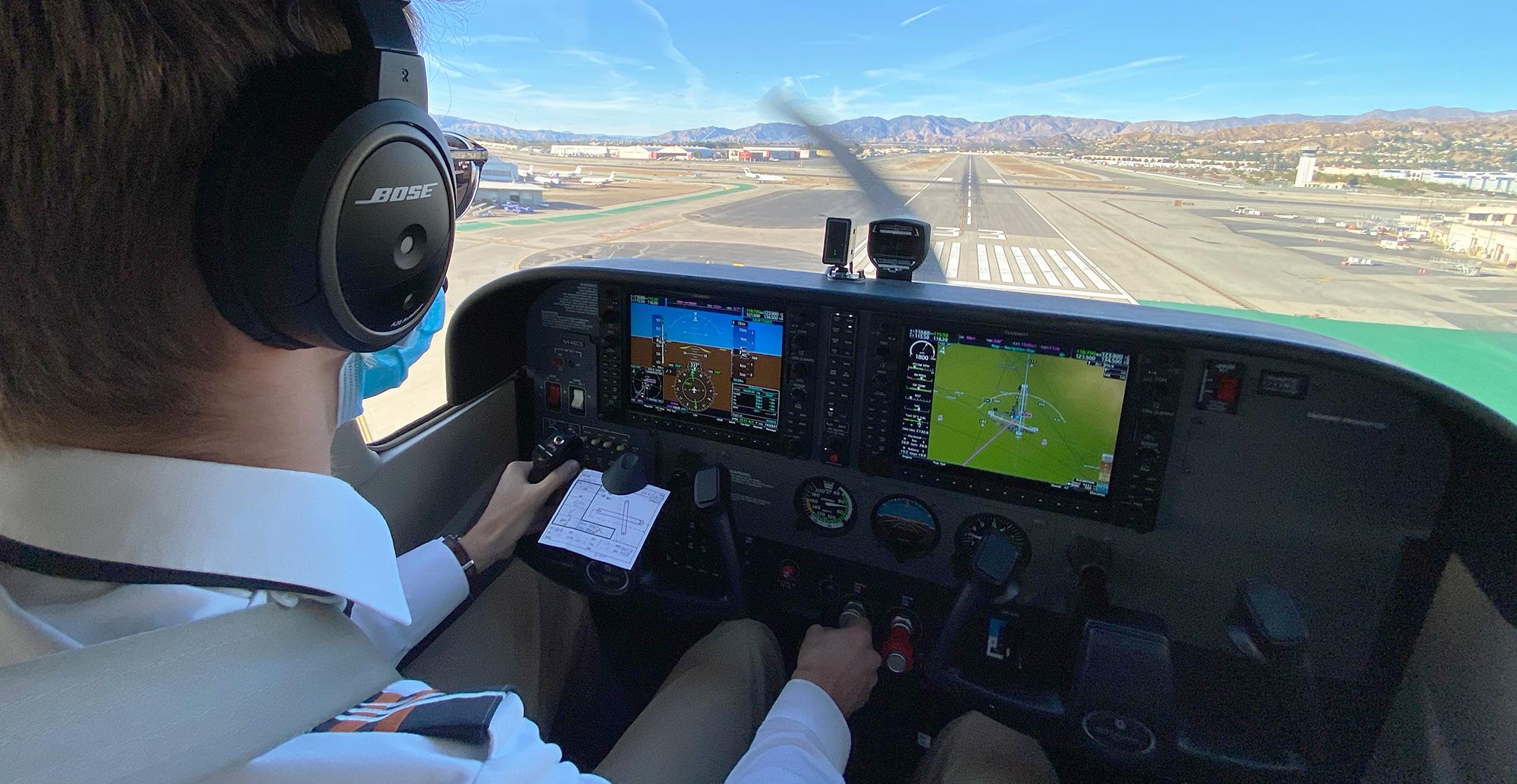
During the training, you will fly with a modern glass cockpit fleet (G1000) and train both in aircraft and advanced simulators.

You will train on, among others:

  • Cessna 172S
  • Pipistrel Alpha Trainer Pro
  • Diamond DA42
  • Cessna 172 full-motion simulator
  • DA42 type-specific simulator
  • I-JET simulator

California offers an ideal environment for flight training. Thanks to its excellent weather conditions, students can fly consistently throughout the year and build flight hours more efficiently.

Training in California also provides valuable experience with mountain flying and flights to well-known and challenging destinations such as Los Angeles, Las Vegas, Catalina Island, Big Bear, and the Grand Canyon. The region’s busy and complex airspace further strengthens students’ operational awareness and real-world flying skills.

At the same time, students significantly improve their ATC communication skills in English, an essential competency for an international aviation career. Additionally, the absence of landing fees allows for more frequent flights and more intensive practical training.

After successfully completing the programme, you will obtain an EASA CPL(A) licence with Frozen ATPL, including the following ratings and certificates:

  • Single-Engine Class Rating
  • Multi-Engine Class Rating
  • Instrument Rating (Multi-Engine)
  • APS/MCC Certificate
  • Advanced Upset Prevention & Recovery Training (UPRT) Certificate

Additionally, you will also obtain an FAA Private Pilot Licence (PPL) with a Single Engine Land rating. Under Belgian regulations, graduates may also apply for an academic equivalence to a Professional Bachelor’s degree in Aviation.

With these qualifications, you will be eligible to apply to any European airline, as well as to airlines operating under EASA guidelines. 

As a member of the International Pilot Center Alliance (IPCA), EuroPilot Center offers graduates continued support after completing their training. Alumni can train in the I-JET simulator and take part in missions within a realistic airline environment, helping them gain valuable operational experience and prepare for their first airline job.

As a result, 95% of our graduates receive a job offer within one year of completing the programme, with airlines such as Brussels Airlines, KLM/Air France Group, British Airways, TUI fly Belgium, ASL Airlines Belgium, Ryanair, airBaltic, VietJet Air, and various private jet operators.